Designing the Narrative: A Visual Language of Action and Intent
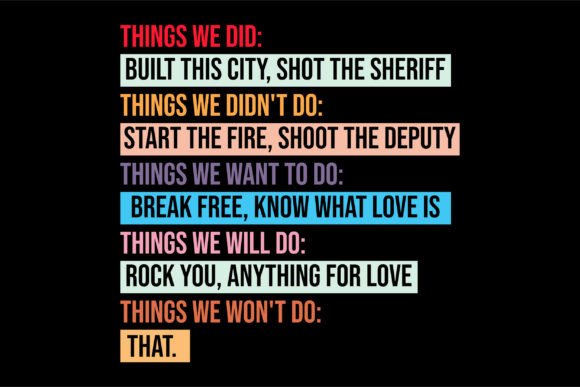
In the realm of graphic design, visual communication is rarely just about aesthetics; it is about defining a stance. The concept behind "Things We Did Didn't Want Will Won't Do" offers a fascinating framework for typography and layout design, transforming a complex narrative of past, present, and future into a bold stylistic statement. This specific creative asset, a stylish T-shirt vector design, leverages modern aesthetics to tell a story that resonates with pop culture while maintaining a clean, professional presentation. By juxtaposing iconic lyrics with a structured list format, designers can create a powerful sense of visual hierarchy that captures immediate attention.
The Anatomy of Effective Visual Communication
Understanding the structure of this design is crucial for creators working in branding and merchandise. The layout breaks down into distinct categories—did, didn’t, want, will, and won’t—allowing for a dynamic flow of information. This approach mirrors effective UI design principles, where content is segmented to improve readability and user engagement. The use of high-quality vector files ensures that whether the design is applied to large-scale packaging design or small social media graphics, the integrity of the typography and line work remains impeccable.
For Print-on-Demand (POD) creators, the versatility of this asset is a significant advantage. The design serves as a prime example of how editorial design principles can be adapted for merchandise. It does not just sit on a surface; it invites the viewer to read, categorize, and interpret. This level of engagement is what separates generic templates from premium creative assets.
Practical Applications in Branding and Marketing
The versatility of this vector artwork extends far beyond a simple T-shirt. Its structured yet playful nature makes it suitable for a variety of creative projects. When selecting assets like this for your portfolio, consider how the visual language aligns with the target audience. The design utilizes a color palette and typography that speak to a modern, culturally aware demographic.
Here are key areas where this design style excels:
- Brand Identity: Use the segmented layout concept for logo design elements or brand manifestos that need to convey complex values quickly.
- Digital Marketing: The bold, list-based format is perfect for Instagram stories or web banners where quick scanning is essential.
- Web Design: Incorporate similar visual hierarchies into landing pages to guide the user’s eye through features or benefits.
- Advertising Campaigns: The juxtaposition of "did" versus "won't" creates a narrative tension that is highly effective in advertising.
Optimizing Your Design Workflow
Including PNG, SVG, EPS, and PDF formats is standard for professional graphic design workflows, but the real value lies in customizability. When integrating such assets into a broader visual design system, ensure that the scaling properties of the vector files are utilized to maintain sharpness across different mediums. Whether you are working on packaging design or digital displays, the ability to edit anchor points and color fills allows for seamless integration with existing brand systems.
Ultimately, the goal of any creative asset